
Understand Universal Manifest in Five Minutes, Then Branch Deeper
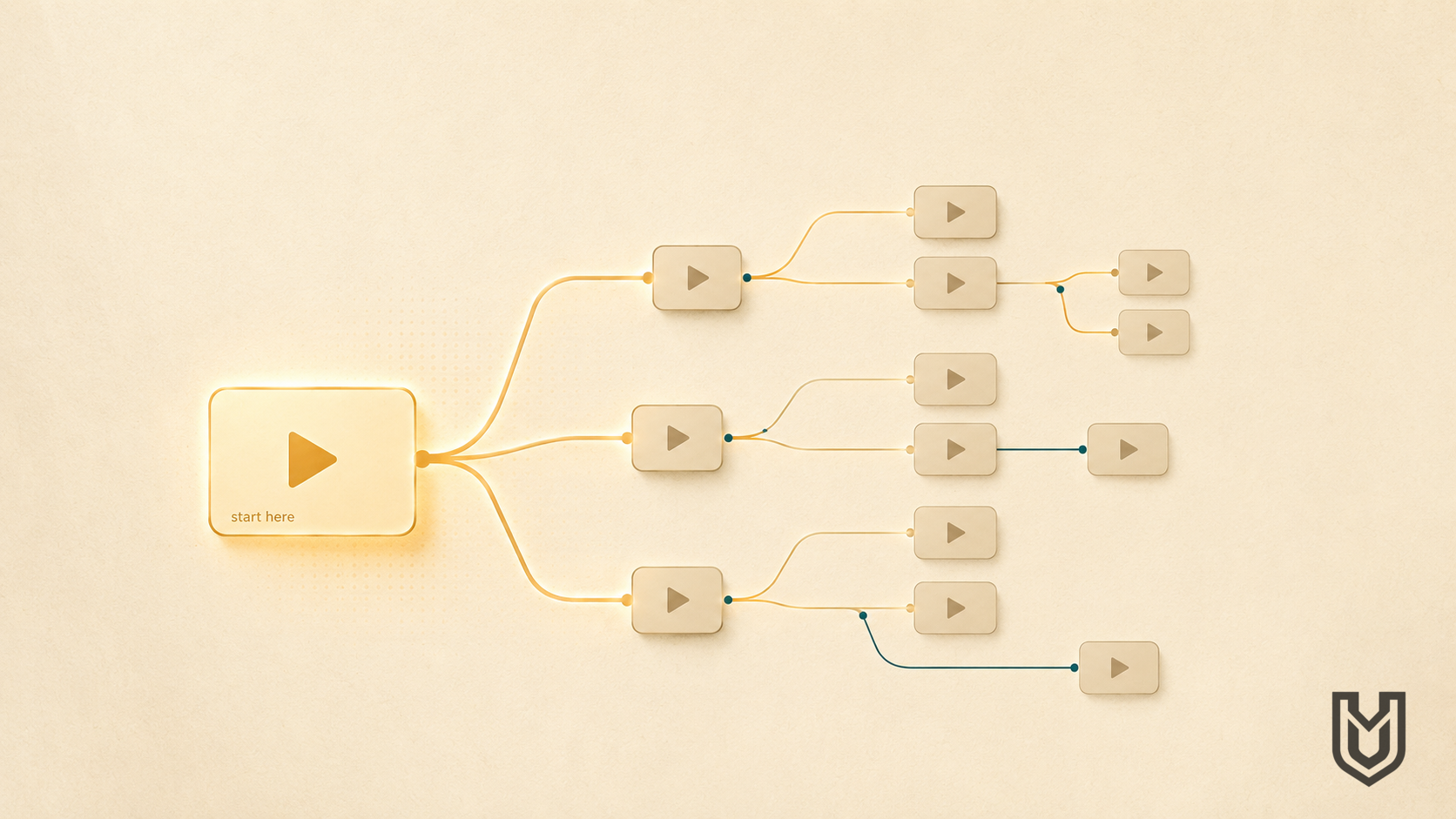
A video library for Universal Manifest is live. The overview explains the whole idea in about five minutes, then the library branches by interest, so you go only as deep as your work needs. Eighteen explainers, about two hours, and you only ever watch your own path through it.
There is now a video library for Universal Manifest, live at universalmanifest.net/videos. The overview explains the whole idea in about five minutes, and from there the library branches by interest, so you follow only the parts that matter to your work. It is the fastest way into the project without opening the specification.
The library is built as a path, not a pile. Reading the spec is how you implement Universal Manifest; watching is how you understand it. Each video runs a few minutes and assumes only the one before it, so you start with the basic question and go exactly as deep as your work needs, no further.
Start with the overview, then branch
The first video, “What Is Universal Manifest?”, answers the basic question in under six minutes: a portable, signed envelope that holds your identity, your assets, how you present yourself, and the permissions you set, and shows the right version of you whenever two parties meet. After that you choose your path. Pick a topic and the page returns just that topic’s videos, ordered from the overview down to the deeper cuts. That ordered list is a playlist. There is a “Play all” button if you would rather watch the whole set in sequence, and the page keeps track of which ones you have already watched.
What the videos cover
Eighteen videos are up now, grouped into seven topics:
- Identity. How a manifest carries who you are, and how a receiver checks it.
- Consent and privacy. What a receiver is allowed to do with your data, and how selective disclosure works.
- Portaling. Carrying your state from one world to the next without starting over.
- Standards. How Universal Manifest composes with DID, Verifiable Credentials, and the rest of the stack.
- RP1 and spatial fabric. Where Universal Manifest fits in spatial computing infrastructure.
- Enterprise. What adoption looks like for an operator.
- How it works. The evaluation sequence and the receiver’s behavior, in plain terms.
The whole library runs about two hours end to end, but it is built so you never have to watch two hours. Watch the overview, then the one branch that matches your work.
A growing set
The library is published one explainer at a time, and the page lists the ones that are ready now. More are on the way, and a topic that is thin today is where the next videos are headed.
Watch the overview, then read the use cases or the spec when you want the detail underneath.